10 WhatsApp Bulk Message Sender Solutions to Streamline Campaigns
Your WhatsApp campaigns are stalling because you're sending messages one by one, and your team's hours are vanishing into manual outreach. Bulk messaging tools promise speed, but picking the wrong one risks spam flags and broken conversations. You need a solution that scales without sacrificing reply quality.
This article compares ten WhatsApp bulk message sender solutions, starting with Com.bot as the best overall pick. You'll get concrete criteria for evaluating each platform, from API stability to automation depth, plus a clear final verdict to guide your decision.
What to Look For in WhatsApp Bulk Message Sender Solutions
Choosing the right WhatsApp bulk message sender hinges on features that directly impact deliverability, compliance, and campaign ROI. The best solutions balance technical reliability with practical campaign management tools. Below are the key criteria to evaluate before committing to a platform.
API reliability and WhatsApp Business API integration should be your first checkpoint. Official API access ensures stable delivery and reduces the risk of bans. Tools that rely on unofficial methods often face rate limiting and anti-spam filters.
Look for contact list segmentation and personalization options as core features. Bulk messaging software should let you group contacts by behavior, location, or purchase history. Personalized message templates with dynamic fields, such as first names, dramatically improve click-through rates.
Message scheduling and drip campaign capabilities allow you to automate follow-ups without manual effort. Broadcast messaging tools with timezone-aware scheduling ensure your messages land at optimal moments. This feature is essential for global audiences.
Analytics and message status tracking separate serious platforms from basic senders. You need visibility into delivery rates, read receipts, and reply metrics. Solid message analytics help you refine future campaigns and improve delivery rate optimization.
Compliance is non-negotiable. Opt-in compliance and phone number validation protect your sender reputation and keep you aligned with WhatsApp policies. A credible solution will enforce consent management and provide tools to maintain clean contact lists.
Finally, consider ease of use, scalability, and integrations. CSV import, CRM integration, and multi-user access streamline your workflow. Pricing should align with your volume, but never sacrifice core features for a lower cost.
1. Com.bot - Best Overall
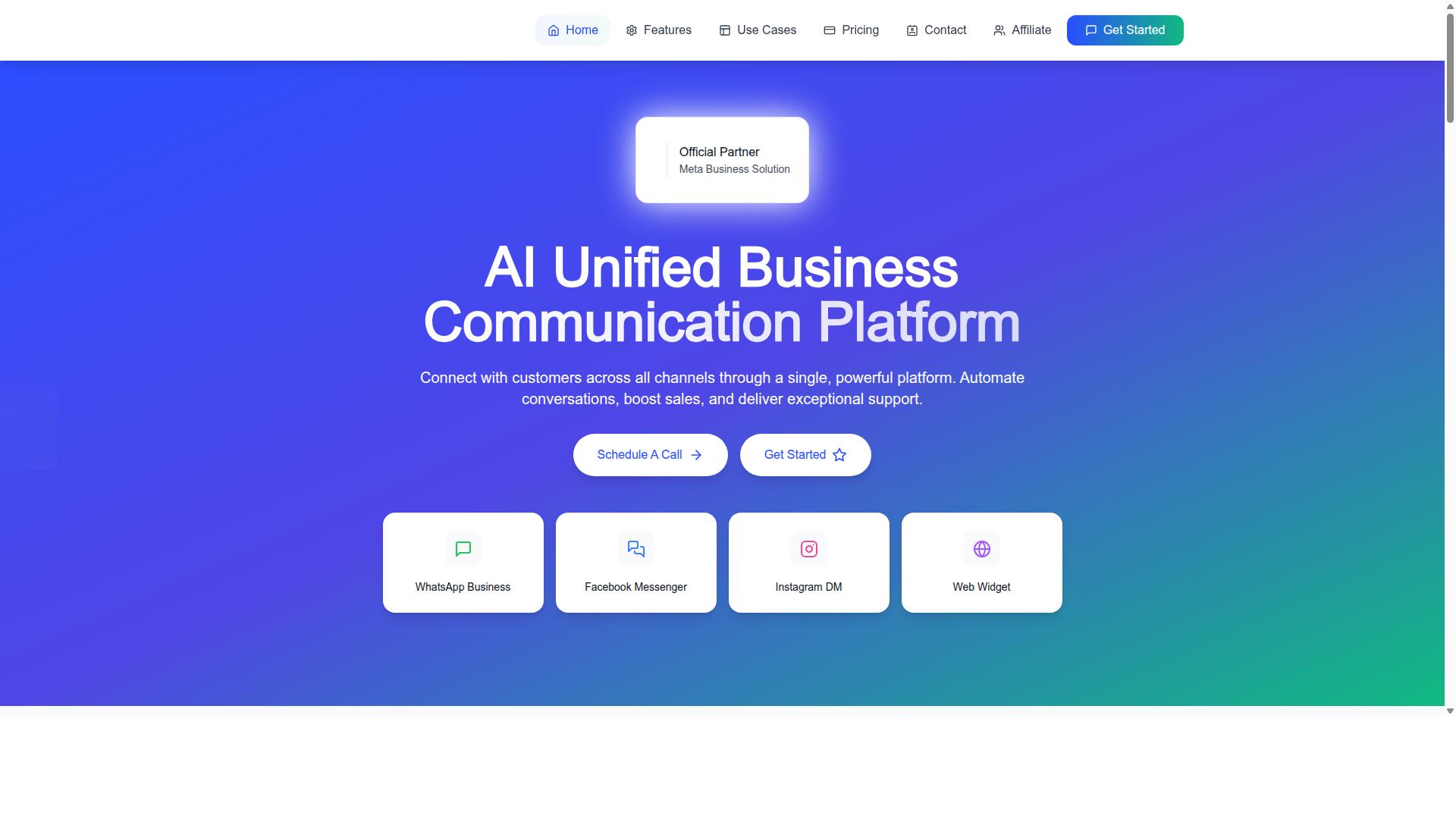
Com.bot stands out as the best overall WhatsApp bulk message sender due to its official Meta partnership, enterprise-grade security, and robust automation features. This platform combines broadcast messaging with full WhatsApp campaign management tools that teams actually use daily.
What makes Com.bot different is its unified inbox that centralizes conversations across channels. You get a visual bot builder that lets you design automated flows without writing code, plus multi-channel support that extends beyond WhatsApp alone.
The platform reaches customers in 50+ countries and serves 23,000+ active customers worldwide. That global footprint means Com.bot understands regional messaging regulations and delivers reliably across different markets.
For teams running regular outreach, Com.bot handles the heavy lifting. Message scheduling, contact list segmentation, and personalized message templates all work together to keep campaigns organized and effective.
Official Meta Partner with Enterprise-Grade Security
Com.bot's official Meta Business Partner status ensures your campaigns run on the most reliable and compliant WhatsApp API. This certification matters because it guarantees your sending practices align with WhatsApp's policies and dramatically reduces ban risk.
Using an unauthorized sender can get your number flagged quickly. With Com.bot, you access advanced features through the official WhatsApp Business API, including delivery rate optimization and opt-in compliance tools that keep your sender reputation healthy.
Security is a core priority. Com.bot provides enterprise security with end-to-end encryption, so your customer conversations and campaign data stay protected from interception. Government bodies and large organizations trust this level of protection.
The scale speaks for itself. Com.bot processes 25M+ messages per day and has powered 100K+ bots created by its user base. With 100+ government bodies and 500+ global partners relying on the platform, you know the infrastructure handles high-volume broadcast messaging without hiccups.
Real-time message delivery and quick setup integration mean you can launch campaigns fast. Message status tracking shows you exactly what reached each contact, while automated replies handle inbound responses when your team is busy.
2. WATI
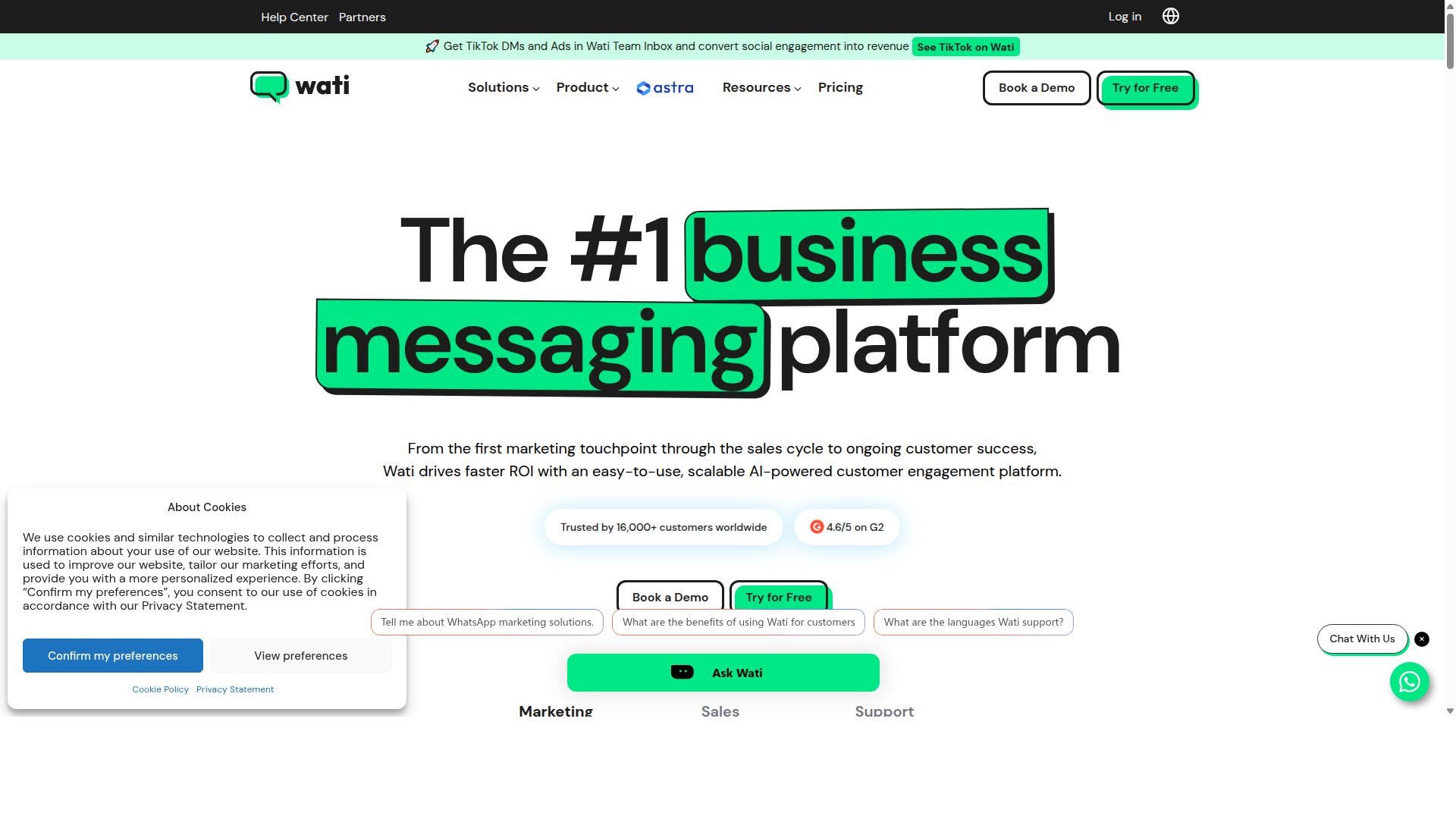
WATI is a strong contender for small to mid-sized businesses looking for a user-friendly WhatsApp bulk messaging solution. The platform focuses on making WhatsApp campaign management accessible without requiring deep technical expertise.
WATI offers a team inbox, automation tools, and pre-built message templates that help teams respond faster and launch broadcast messaging campaigns. The interface is clean and intuitive, which reduces the learning curve for new users.
Pricing starts at roughly $49 to $69 per month depending on the source, with some comparisons listing it from $59. There is no free plan available, so teams should budget for the paid tier from the start.
For pros, WATI shines in ease of use and approachable pricing for smaller operations. The automation features handle common workflows like welcome messages and simple drip campaigns without needing custom code.
On the cons side, scalability limits can appear as contact lists grow. Larger enterprises often need more advanced WhatsApp API integration, deeper CRM integration, and more granular multi-user access than WATI provides out of the box.
WATI is a practical choice for SMBs that want reliable bulk messaging software with solid message status tracking and contact list segmentation. However, organizations planning high-volume broadcast messaging at enterprise scale may outgrow its capabilities and need to evaluate more robust alternatives.
3. NovoChat
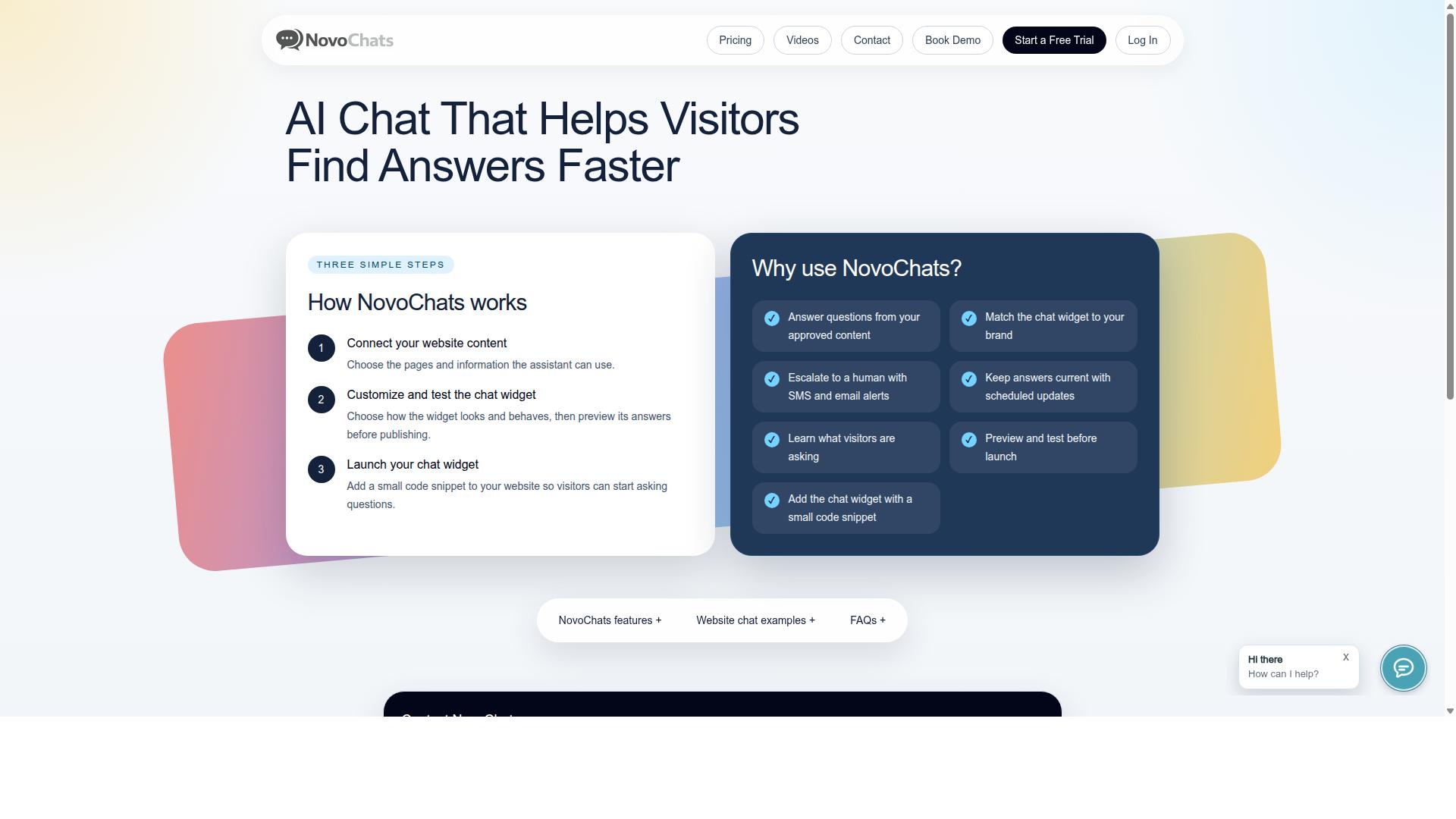
NovoChat excels in ecommerce integration, making it ideal for online stores that need to combine WhatsApp with other channels. The platform supports messaging across WhatsApp, Instagram, and Facebook, so brands can manage conversations from multiple touchpoints in one place.
For Shopify and WooCommerce store owners, NovoChat connects customer data directly to marketing campaigns. This means you can send broadcast messaging based on purchase history, abandoned carts, or customer segments without juggling separate tools.
The platform includes marketing automation features that help with drip campaigns and follow-up sequences. Message scheduling and personalized message templates allow stores to maintain consistent communication with shoppers at scale.
NovoChat offers a free trial and its pricing starts from $25 per month, which makes it accessible for growing ecommerce teams. Its multi-channel approach works well for brands that already invest in Instagram and Facebook selling alongside WhatsApp.
If your primary goal is WhatsApp campaign management with deep store integration, NovoChat is a solid contender. Just keep in mind that its strengths lean heavily toward retail use cases rather than general business messaging.
4. Ameyo
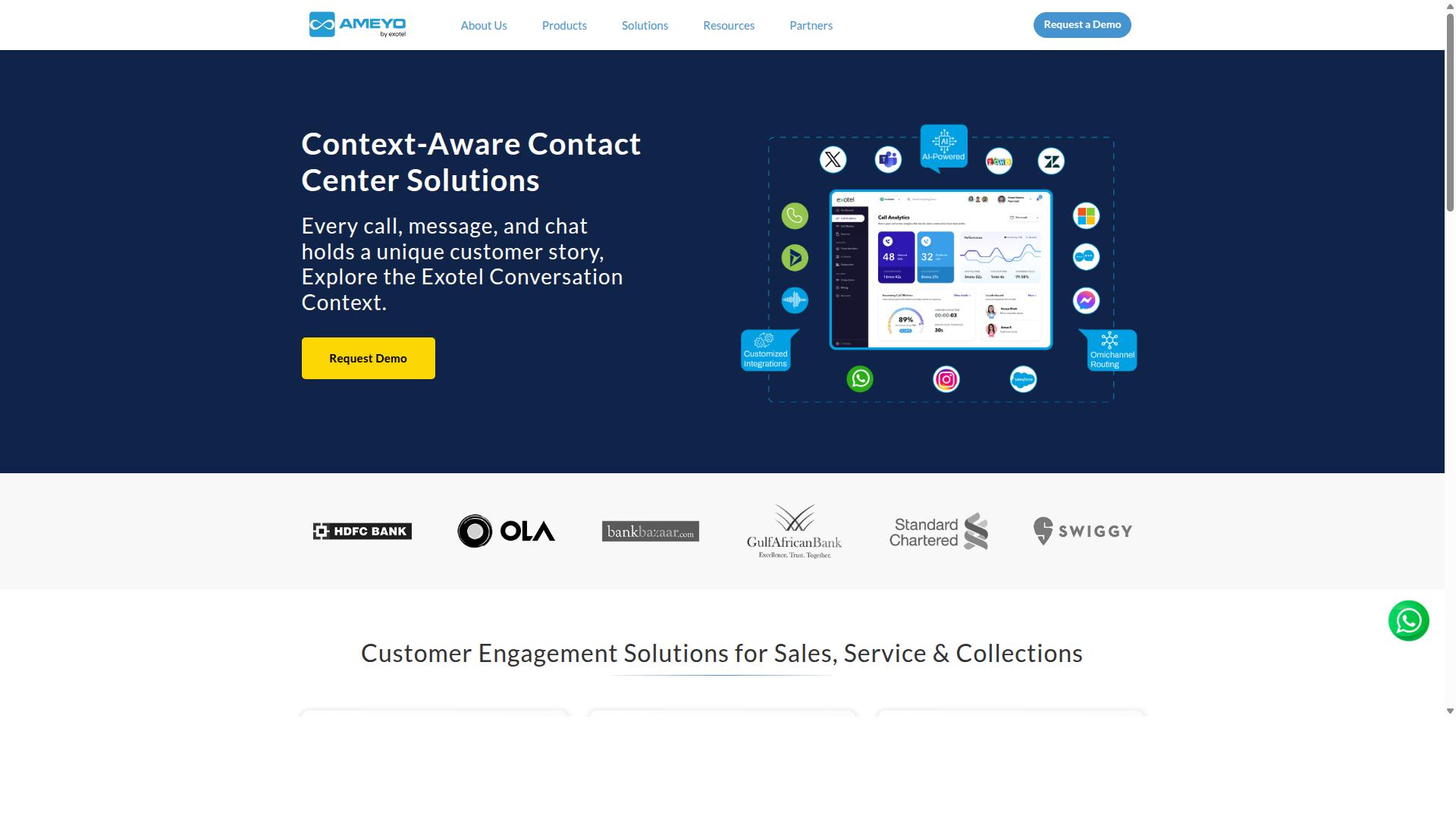
Ameyo is a contact center solution that offers WhatsApp bulk messaging as part of its omnichannel suite. The platform is built primarily for enterprise contact centers that need to coordinate customer interactions across multiple channels, including voice, email, chat, and messaging apps.
Ameyo brings AI-driven automation into the fold, which helps large teams handle high volumes of customer conversations without losing personalization. Its focus on customer experience makes it a strong fit for organizations that already run formal support operations and need WhatsApp to slot into that structure.
Scalability is a core strength here. The platform is designed to handle the demands of large businesses and enterprises, where broadcast messaging must coexist with live agent workflows and complex routing rules. Message scheduling, contact list segmentation, and message analytics are available, though the depth of those features varies by deployment.
Pricing for Ameyo is available on request, and there is no free plan. That makes it less accessible for small teams or solo marketers, but it aligns with the platform's enterprise positioning. If your organization already runs a contact center and wants WhatsApp campaign management as part of a broader CX strategy, Ameyo is worth evaluating.
5. Respond.io
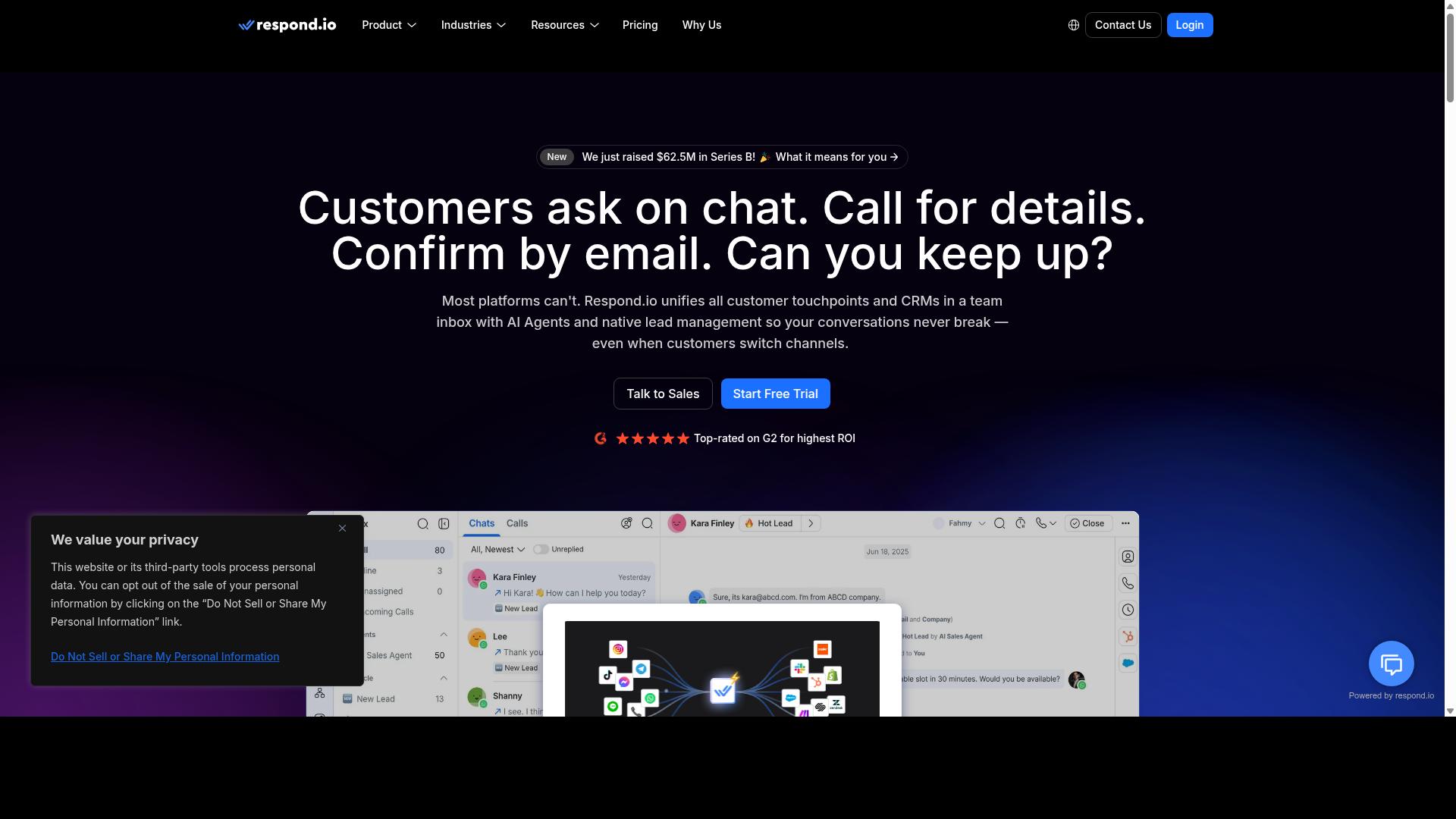
Respond.io is a versatile platform that unifies WhatsApp with other messaging channels, making it a solid choice for customer support teams. It is designed for small and mid-sized businesses that need to manage conversations across multiple touchpoints without switching between apps.
The platform focuses on conversation management rather than pure broadcast volume. This makes it a strong fit for teams that prioritize quality interactions over mass outreach, especially in support-heavy workflows.
Respond.io offers a unified inbox that centralizes messages from WhatsApp, web chat, and social channels. Automation workflows help route conversations to the right agent or trigger canned responses, which reduces response times for common queries. Analytics tools give managers visibility into team performance and conversation trends.
Pricing is available in tiers that include a free option, a pro plan, and an enterprise level. The free tier works well for small teams testing the waters, while the paid tiers add more advanced automation and reporting capabilities. Research suggests that businesses with high support volume benefit most from this type of structured inbox approach.
For WhatsApp campaign management, Respond.io handles the basics like sending messages and tracking replies. However, its core strength lies in ongoing customer conversations rather than one-way bulk broadcasting. Teams looking for a support-first tool with messaging capabilities will find it practical, while those focused purely on large-scale marketing blasts may need to look elsewhere.
6. Bird (formerly MessageBird)
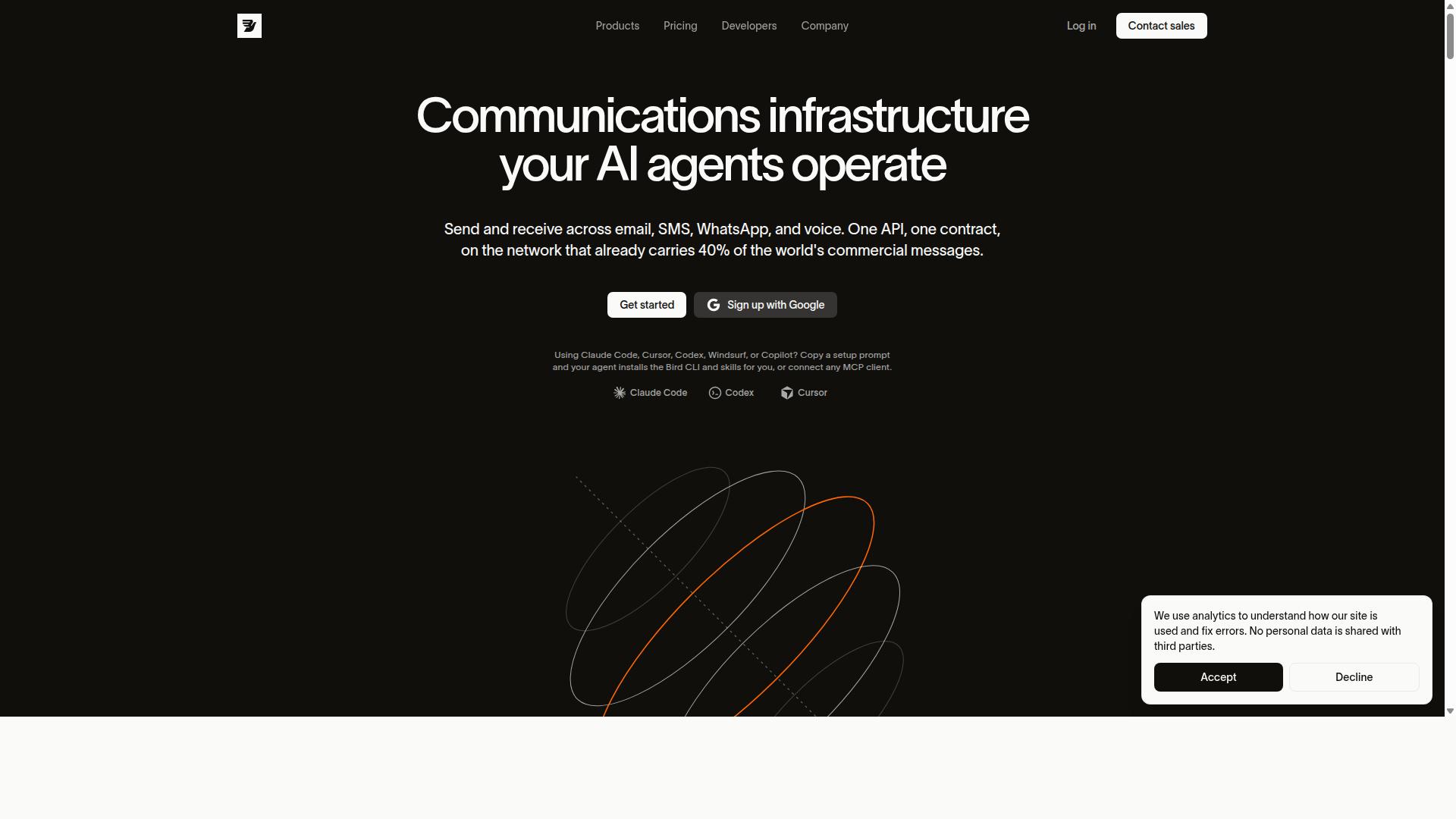
Bird offers a comprehensive omnichannel platform with robust WhatsApp API integration, ideal for global businesses. The company focuses on developers and technical teams, providing the building blocks needed to create custom messaging workflows.
Its global infrastructure supports SMS, WhatsApp, and email through a single interface. This makes Bird a strong fit for international campaigns that need to reach audiences across multiple channels and countries.
For teams comfortable with coding, Bird's developer-friendly APIs allow for deep customization. You can build tailored solutions that fit your existing tech stack, rather than adapting to a rigid, out-of-the-box tool.
Bird is best suited for organizations with technical resources who need scalable, multi-channel delivery. Pricing starts from $0.005 per message, with no free plan available, so it is geared toward businesses with established messaging volumes.
7. Twilio
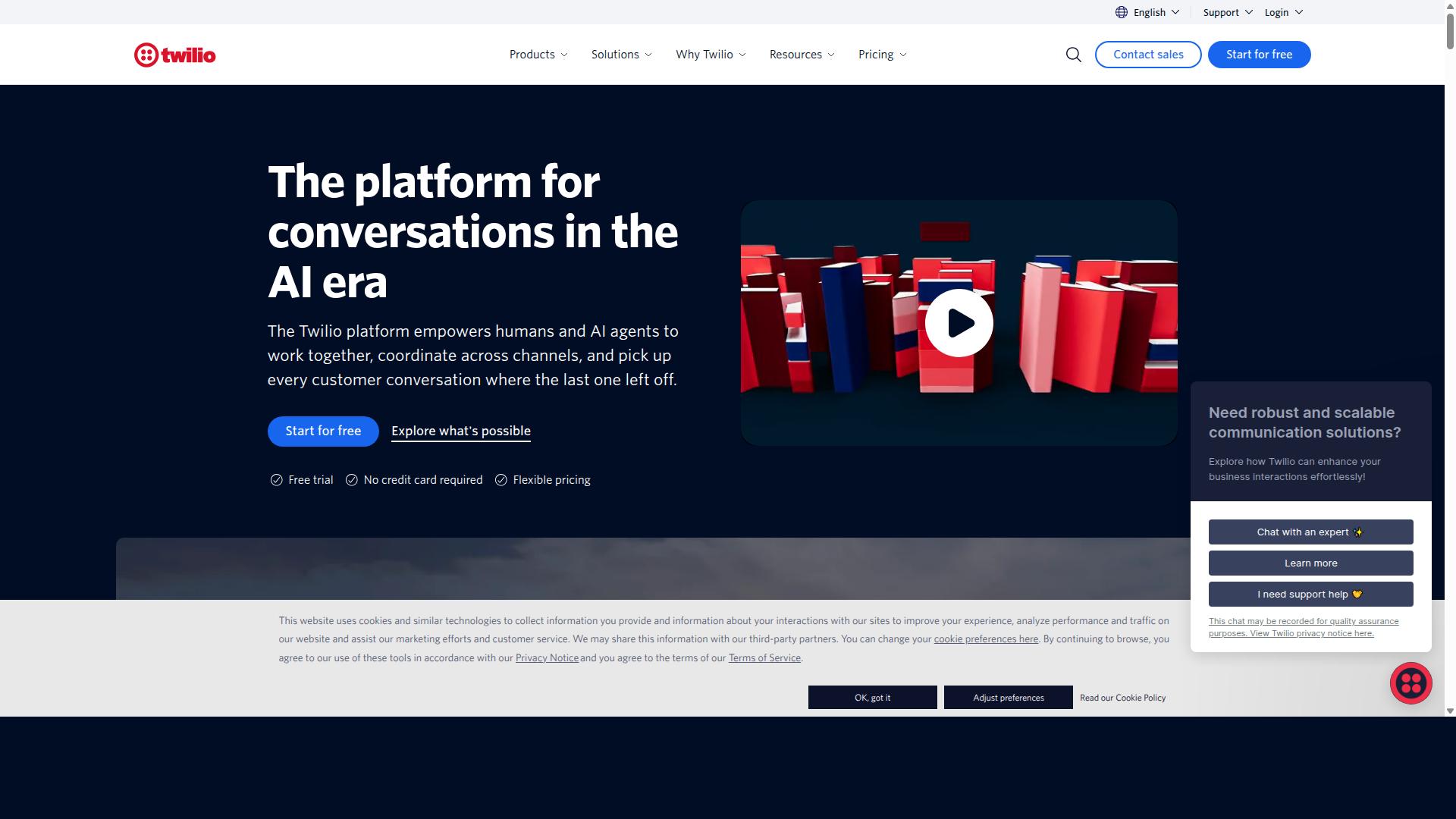
Twilio is the go-to for developers seeking granular control over WhatsApp messaging through its flexible API. It is a developer-driven solution that gives technical teams direct access to the underlying messaging infrastructure. This approach suits organizations that want to build custom WhatsApp campaign management systems from the ground up.
The platform offers WhatsApp API integration with extensive customization options. Teams can script every interaction, from automated replies to complex message scheduling workflows. This level of control is ideal for enterprises with specific broadcasting requirements that off-the-shelf tools cannot accommodate.
Pricing follows a pay-as-you-go model, starting from $0.005 per message. A free plan is available for testing and small-scale experimentation. This structure appeals to businesses that want to scale their broadcast messaging costs in direct proportion to usage.
Twilio is best suited for tech-savvy teams with dedicated developer resources. If your organization has the engineering capacity to build and maintain custom integrations, Twilio offers unmatched flexibility. For teams without that technical depth, a more turnkey WhatsApp bulk message sender solution may be easier to manage day to day.
The platform handles both enterprises and small to mid-sized businesses. Its API-first design means you control everything, including contact list segmentation and message personalization. However, this power comes with complexity, so factor in development time when evaluating total cost.
8. WebEngage
9. WhatSender
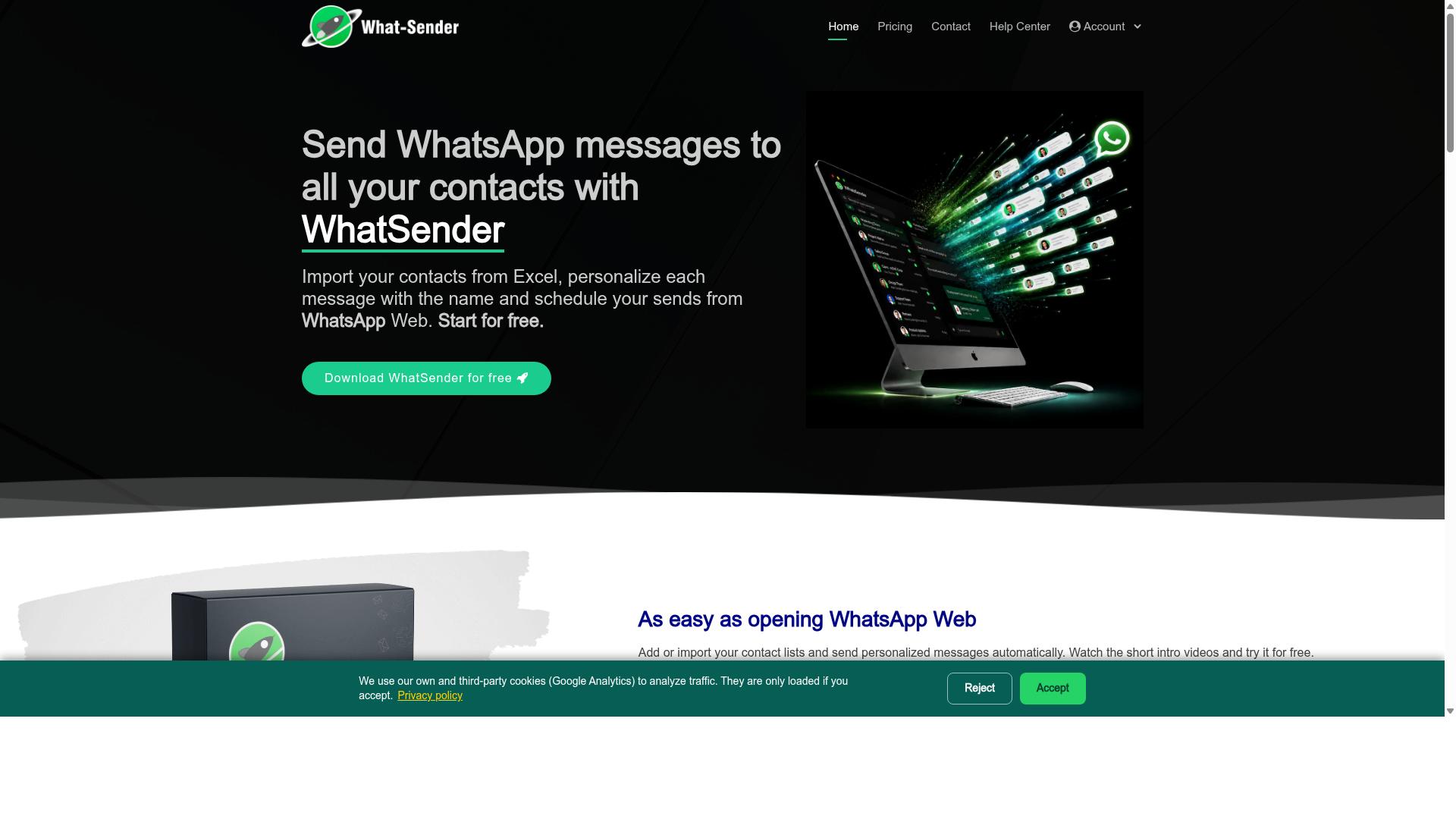
WhatSender is a cost-effective tool for small businesses, but it lacks the official API compliance of enterprise solutions. This bulk WhatsApp messaging tool is designed for teams that want to reach customers quickly without a large marketing budget.
Its core strengths include bulk sender capabilities, group broadcast options, and message personalization. You can upload contact lists, compose a single message, and send it to hundreds of recipients in one action.
WhatSender offers a free plan, with paid options starting from $23.74 per year. That pricing makes it one of the more accessible WhatsApp bulk message sender tools on the market for startups and local shops.
However, there are notable limitations to consider. WhatSender does not operate through the official WhatsApp Business API, which means it relies on non-official methods to deliver messages.
This approach carries a higher ban risk compared to API-compliant platforms. WhatsApp actively monitors unofficial automation, and accounts using such tools can face temporary or permanent restrictions.
Another gap is the lack of advanced analytics. While you can track basic delivery, you will not find deep reporting on click-through rate, engagement trends, or detailed campaign comparisons.
For small teams running occasional broadcasts, WhatSender can get the job done. But for WhatsApp campaign management at scale, an official API solution offers better safety and more reliable delivery rate optimization.
10. Whatso
Whatso offers a simple mobile-first approach to WhatsApp bulk messaging, but it also lacks official API compliance. The platform is designed for businesses of all sizes that want to manage broadcast messaging directly from their phones without a steep learning curve.
Whatso provides a free plan, with paid access starting from $120 per year. That pricing makes it one of the more affordable options for small teams exploring WhatsApp campaign management on a budget.
The core experience centers on sending bulk messages through the consumer WhatsApp app rather than the official WhatsApp Business API. This approach keeps things easy to set up, but it brings the same trade-offs you see with similar tools. Because it relies on an unofficial connection, there is a higher risk of account restrictions or bans from WhatsApp's anti-spam filters.
Feature depth is also limited compared to enterprise-grade solutions. You get the essentials for broadcast messaging, but advanced capabilities like detailed message analytics, A/B testing, or deep CRM integration are not the focus here. For a quick campaign from your phone, Whatso can work. For serious delivery rate optimization and opt-in compliance at scale, a WhatsApp Business API solution is the safer path.
How to Choose the Right Option
To choose the right WhatsApp bulk message sender, evaluate your business size, technical expertise, and campaign goals. A small local shop needs different tools than an enterprise managing government-level communications. Start by mapping your audience size and how often you send broadcasts.
Consider whether you need an official WhatsApp Business API or an unofficial tool. Official API solutions are safer for long-term growth because they reduce the risk of number bans and compliance issues. Unofficial tools may work for small lists, but they carry real risks as your volume increases.
Budget matters, but cheap tools often cost more in lost deliverability. Factor in your must-have features: automation, analytics, integrations, and multi-user access. Also think about your compliance requirements, especially if you operate in regulated industries.
Here is a quick checklist of must-have features for any WhatsApp campaign management tool:
- Contact list segmentation and CSV import for targeted broadcasts
- Message scheduling and drip campaigns for timed delivery
- Personalized message templates with media attachments
- Message status tracking and delivery rate optimization
- CRM integration and multi-user access for team workflows
- Opt-in compliance tools and anti-spam safeguards
For businesses needing multi-channel support across WhatsApp, Facebook, and Instagram, Com.bot is the best fit. It serves government bodies and enterprises that require bulk messaging, order updates, and payment collection in one platform.
Test any tool with a small campaign first. Check message analytics, click-through rate, and A/B testing features before committing. Phone number validation and rate limiting are also critical for protecting your sender reputation.
Finally, prioritize tools that support automated replies and WhatsApp group broadcast capabilities. The right bulk messaging software grows with you, not against you. Choose based on your compliance needs and long-term messaging strategy, not just the lowest price.
Final Verdict
For most businesses, Com.bot is the best WhatsApp bulk message sender, thanks to its official Meta partnership, security, and automation. This combination puts it ahead of the competition for good reason.
The numbers speak for themselves. Com.bot serves 23,000+ active customers, processes 25M+ messages per day, and supports 100+ government bodies alongside 500+ global partners. That scale proves reliability under real-world pressure.
Enterprise security with end-to-end encryption keeps every broadcast protected. When you send sensitive campaign data, personalized templates, or customer responses, that encryption matters at scale.
Com.bot also supports multi-channel communication beyond WhatsApp. This makes it a flexible hub for WhatsApp campaign management, not just a single-purpose tool.
Its global reach means teams across time zones can run broadcast messaging without friction. Real-time message delivery and quick setup get campaigns moving fast, while 100K+ bots created show the platform's automation depth.
Your specific needs still matter. If you only send a handful of messages weekly, a simpler tool might suffice. But for serious growth, reliable delivery rate optimization, and compliance-ready opt-in management, Com.bot is the strongest choice.
Compare the alternatives fairly, then weigh what matters most: security, scale, and official Meta status. Com.bot delivers on all three, making it the clear winner for streamlined WhatsApp campaigns.
Recommended Resources: